• Malicious sites

    Hhyu ransomware [.hhyu file virus] removal instructions.

    Hhyu is a ransomware that attacks Windows files and damages them by means of encryption. For this reason, Hhyu is often referred to as the file virus. Hhyu actually belongs to the STOP/DJVU family. Intrusion of this ransomware is the result of poor protection of the system by the current anti-virus software. It is not possible to recover the files without the decryption key, regretfully.

  • Malicious sites

    Dotchaudou.com notifications – how to remove?

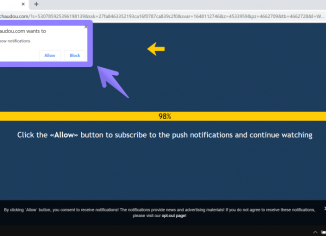
    Dotchaudou.com is a malicious site that attempts to encourage its visitors into subscribing to the multiple advertisements that will be displayed in the form of multiple web push notifications. The site dotchaudou.com says that the customers need to click on the special “Allow” button supposedly to verify the age or to prove that they’re not robots. However, in reality, clicking on “Allow” is definitely a mistake that will cause a lot of problems. Because of that, the browser would be hijacked and contaminated with multiple ads that will be popping up randomly on the computer screen. We recommend you to…

  • Malicious sites

    Desktopnotificationshub.com browser ads – how to remove?

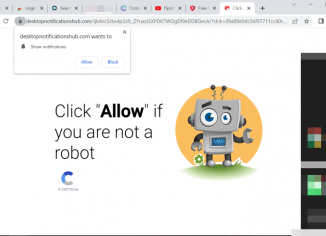
    Desktopnotificationshub.com is yet another deceptive and totally malicious website that attempts to encourage its visitors into subscribing to its multiple ads in the form of web push notifications. Of course, there is nothing wrong in web push notifications, as long as they are decent. However, this particular site has in mind to redirect you to a lot of other shady resources through its annoying and deceptive ads. Therefore, we do consider it to be a totally dangerous resource.

  • Malicious sites

    Ourcommonstories.com notifications (removal guide).

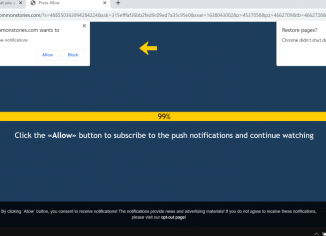
    Ourcommonstories.com is a site that tries to encourage the visitors into subscribing to the permanent ads in the form of annoying web push notifications. The site attempts to make customers click on the special “Allow” button inegrated into it. But the point is that clicking on “Allow” is a serious mistake that will hijack your browser settings. The browser may start showing a lot of ads by the ourcommonstories.com site. Because of that, the computer may be infected with a lot of other potentially unwanted programs.

  • Malicious sites

    News-kehalo.cc fake Human Verification alert removal.

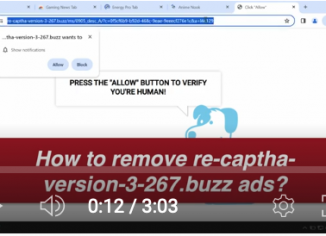
    News-kehalo.cc stands for a new deceptive website. Its main mission is to force customers into subscribing to the multiple advertisements in the form of annoying web push notifications. The site news-kehalo.cc says that you need to confirm that you’re not a robot. For this purpose, the site asserts, you need to click on the “Allow” button. However, this would immediately hijack your browser and would start causing the great portion of annoying ads to attack your screen. These ads will be attacking the screen in the form of multiple web push notifications in the right part of the computer screen.…

  • Malicious sites

    Notadslife.com browser notifications – how to remove?

    Notadslife.com website may periodically attack Google Chrome, Mozilla Firefox and other browsers. It is extremely dangerous for people to interact with these pop-ups. They try to make people click on the special “Allow” button integrated into it. The website says that it is some part of the human verification process. However, clicking on the “Allow” button is surely a mistake that may hijack your browser with numerous ads. These ads, of course, are extremely dangerous and may eventually redirect you to a lot of other shady resources on the web.

  • Malicious sites

    Desktopnotificationsnews.com advertisements – how to remove?

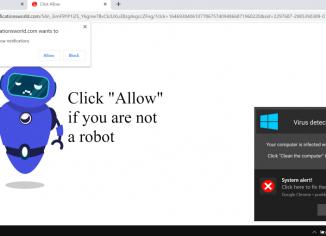
    Desktopnotificationsnews.com stands for a malicious page that tries to encourage its visitors into subscribing to the multiple advertisements in the form of web push notifications. The site attacks Google Chrome, Mozilla Firefox, Opera, Microsoft Edge and other browsers. This particular site is a fake Human Verification alert. It claims that you need to click on “Allow” to help you prove that you’re not a robot. However, we urge you not to do that!

  • Malicious sites

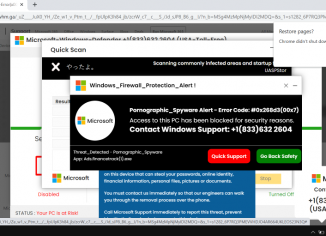
    +1(833)632 2604 fake Windows Support Scam removal.

    +1(833)632 2604 is a fake Windows Support number used in several fake Microsoft Support alerts. These are fake alerts that try to make customers scared about the condition of their computers. Then these pop-ups try to make people download and install some potentially unwanted software, which may infect the system even more dramatically. Hence, you should not trust these fake Windows Support alerts! The phone number +1(833)632 2604 is not a real Microsoft Support number.